Eating Patterns
Seasonal Vegetables and Their Role in the Weekly Food Record
Harriet Whitfield · 12 February 2026 · 9 min read
The relationship between what ends up on the plate each day and how body weight shifts across a month is less about restriction and more about rhythm and awareness — a record of eight weeks of observation.

Portion size is one of the most discussed and least understood variables in everyday nutrition. Most people, when asked, significantly underestimate the volume of food they eat at a sitting — not from dishonesty, but from the genuine difficulty of estimating density, calorie content, and macronutrient distribution without dedicated measurement. What the food journal reveals, when used consistently over eight weeks, is something more useful than a calorie count: it reveals pattern. And pattern is where the connection between daily food choices and body weight actually lives.
There is an important distinction between portion awareness and portion control. The latter implies restriction — measuring, limiting, denying. The former is simply noticing. Noticing how much ends up on the plate, how that relates to hunger at the end of the meal, how it compares to yesterday, how it shifts between weekdays and weekends. Awareness, in this sense, is a data-gathering exercise rather than a behavioural intervention.
Over eight weeks of consistent food journalling with five contributors, the most consistent pattern that emerged was not related to what people ate, but to when and how much. The contributors who experienced the most settled weekly weight pattern were those whose portion sizes varied least day-to-day — not because they were restricting, but because their meals had a consistent structural rhythm: a substantial midday meal, a lighter evening meal, and a morning meal that was never skipped.
This rhythm — which nutritional research has long associated with better weight awareness outcomes — did not require any deliberate planning. It emerged naturally from cooking habits, work schedules, and social routines. The food journal made it visible; it did not create it. This is the fundamental value of the food journal as a tool: it surfaces patterns that already exist but are invisible without a record.

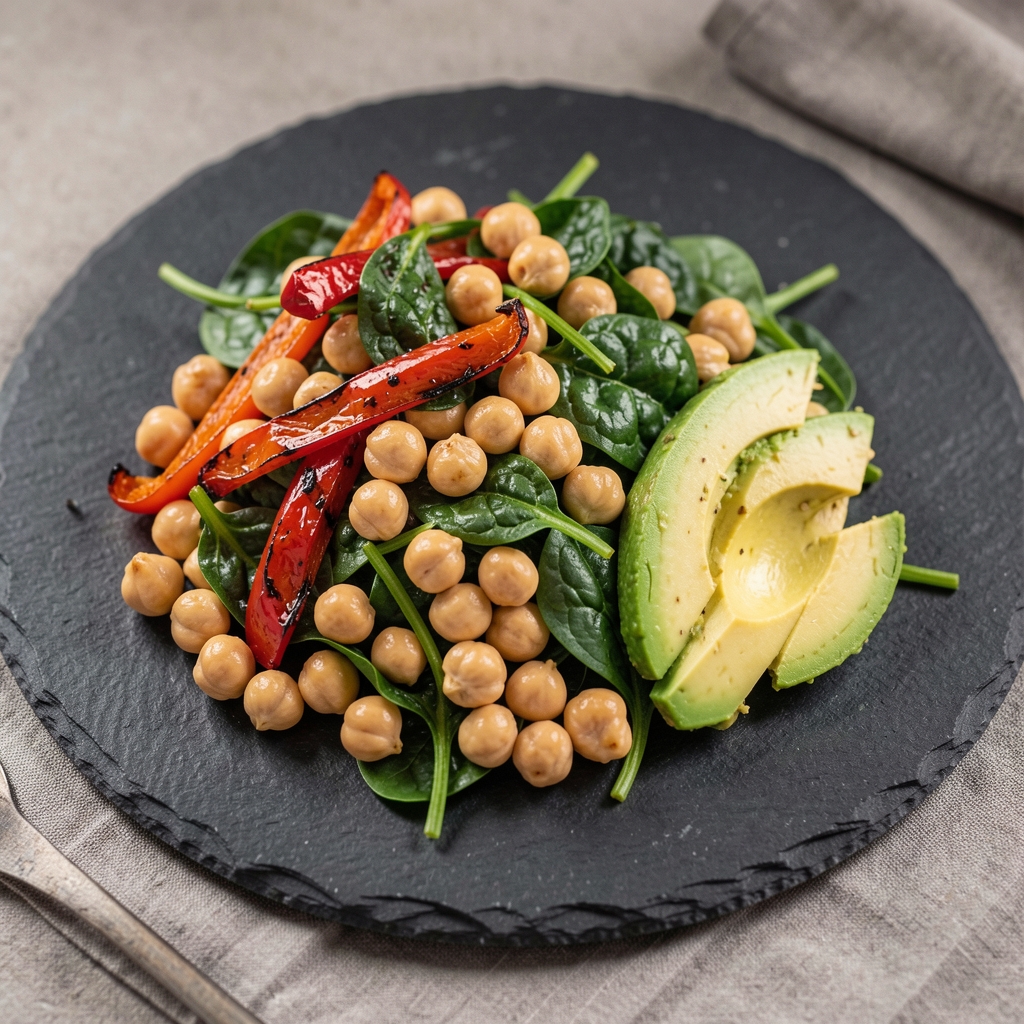
Fig. 01 — Home-cooked midday meal, observation week four. Protein source: lentils. Vegetable count: 4 types.
One of the clearest patterns across the eight-week record was the relationship between protein-rich whole foods and the stability of portion sizes through the day. On days when the midday meal included a substantial protein source — legumes, eggs, fish, lean meat, or whole grains with a complete amino acid profile — the gap between lunch and the evening meal lengthened, and the evening meal tended to be smaller without any deliberate decision to reduce it.
Conversely, on days when the midday meal was predominantly carbohydrate-heavy without adequate protein — a large bowl of pasta with a minimal sauce, for instance, or a sandwich without a meaningful protein component — the contributors consistently noted an increase in hunger by mid-afternoon, a tendency toward unplanned snacking between 15:00 and 17:00, and a larger evening meal. The difference in total daily food volume across these two patterns was notable, and it was consistent across all five contributors regardless of their different daily routines.
This observation aligns with what published nutritional research describes as the satiety effect of dietary protein. Protein-rich whole foods contribute to a sustained sense of fullness in a way that refined carbohydrates alone do not. What the food journal adds to this picture is specificity: it shows not just that this effect exists in general, but when it occurs in a particular person's day, how it interacts with their work schedule and activity level, and which specific foods reliably produce it for that individual.
"The contributors whose portion sizes varied least day-to-day experienced the most settled weekly weight pattern — not because they were restricting, but because their meals had rhythm."
— Eight-week food record, Drevanol Review, 2026
One of the most consistent findings across all eight weeks was what we observed as weekend divergence: a shift in eating patterns on Saturday and Sunday that differed markedly from weekday patterns, and whose effects on weekly weight awareness were clearly visible in the food journal record.
Weekend meals tended to be later, larger, and less structured than weekday meals. Breakfast was often skipped or replaced with a large brunch. Lunch and dinner were frequently social occasions with larger portions and greater processed-food content. Alcohol was present in the evening meals of three of the five contributors. The result, across eight weeks, was a weekly pattern in which Monday and Tuesday entries consistently showed a return to a lower-portion, higher-vegetable structure that appeared to act as a counterbalance to the weekend surplus.
This is not a critique of weekend eating. It is an observation of a natural weekly rhythm that most adults operating within a standard working week will recognise. The food journal's value here is in making this rhythm legible — so that the Monday return-to-structure can be understood as a natural part of the cycle rather than as a failure to sustain a dietary routine. Weight awareness, understood in weekly terms, accommodates this rhythm more readily than any day-by-day assessment can.
Consistent meal timing — rather than deliberate restriction — is the primary structural factor in stable weekly weight patterns.
Protein-rich whole foods at midday reliably reduce afternoon snacking and total evening food volume without deliberate portion counting.
Weekend eating patterns naturally diverge from weekday structure; understanding this as a weekly rhythm rather than a failure is important for long-term weight awareness.
Food journalling surfaces pre-existing patterns — it does not create new behaviour, but makes current behaviour visible enough to understand.
One of the most useful reframings that eight weeks of food journalling produced among contributors was a shift from thinking about diet in terms of restriction to thinking about it in terms of daily food choices — individual decisions that, accumulated over a week, produce a nutritional profile. This reframe is not trivial. It moves the locus of awareness from what is forbidden to what is actually chosen, and the difference in how that feels — and how it affects behaviour — is significant.
A contributor noted, at the end of week six: "I realised this week that I make about 35 distinct food choices per day, if you count every item on the plate separately. Over a week that is 245 choices. Of those, maybe 30 are genuinely habitual — the same breakfast, the same afternoon drink, the same evening snack. The other 215 are genuinely variable. The journal helped me see which of those variables actually matter to how I feel and how my weight moves."
This kind of granular self-knowledge is precisely what makes the food journal a more useful tool than any general nutritional guidance. General guidance describes what the population tends to benefit from. The food journal describes what you specifically eat, when, and in what combinations. The connection between individual daily food choices and individual body weight is always a personal equation — and the journal is the instrument for observing it.
A consistent finding across the eight-week record — consistent enough to warrant its own section — was the relationship between cooking from scratch and portion awareness. Contributors who cooked at least four of their weekday evening meals at home maintained significantly more consistent portion sizes across the week than those who relied on prepared food, takeaway, or restaurant meals for three or more weekday evenings.
This is partly a matter of portion size: home-cooked meals are structured around the amount of ingredient purchased and prepared, which creates a natural ceiling. A pot of soup serves four; a prepared meal serves one, in whatever quantity the manufacturer determined. The element of home-based portion structuring — using what is in the kitchen, portioning by the number of people at the table — produces a discipline of its own that requires no deliberate counting.
There is also an awareness dimension. Knowing what went into a meal — having chosen and prepared the ingredients — creates a baseline of nutritional knowledge about that meal that is unavailable with prepared food. Contributors consistently rated their home-cooked meals as more satisfying, and their food journal entries for those days showed a more settled evening and lower overnight hunger on waking the following morning.

Harriet Whitfield is the founding editor of Drevanol Review. Her editorial focus covers the relationship between everyday food choices, portion awareness, and gradual weight change — subjects she explores through long-form food journalling records and published nutritional research.
More from Harriet Whitfield →Editorial Notice: Articles published on Drevanol Review are editorial in nature and reflect the writers' observations on everyday nutrition practices and weight awareness. The content is not intended as professional advice, nor as guidance for the management of any specific condition. Readers with specific concerns about their daily routines are encouraged to speak with a qualified wellness professional.